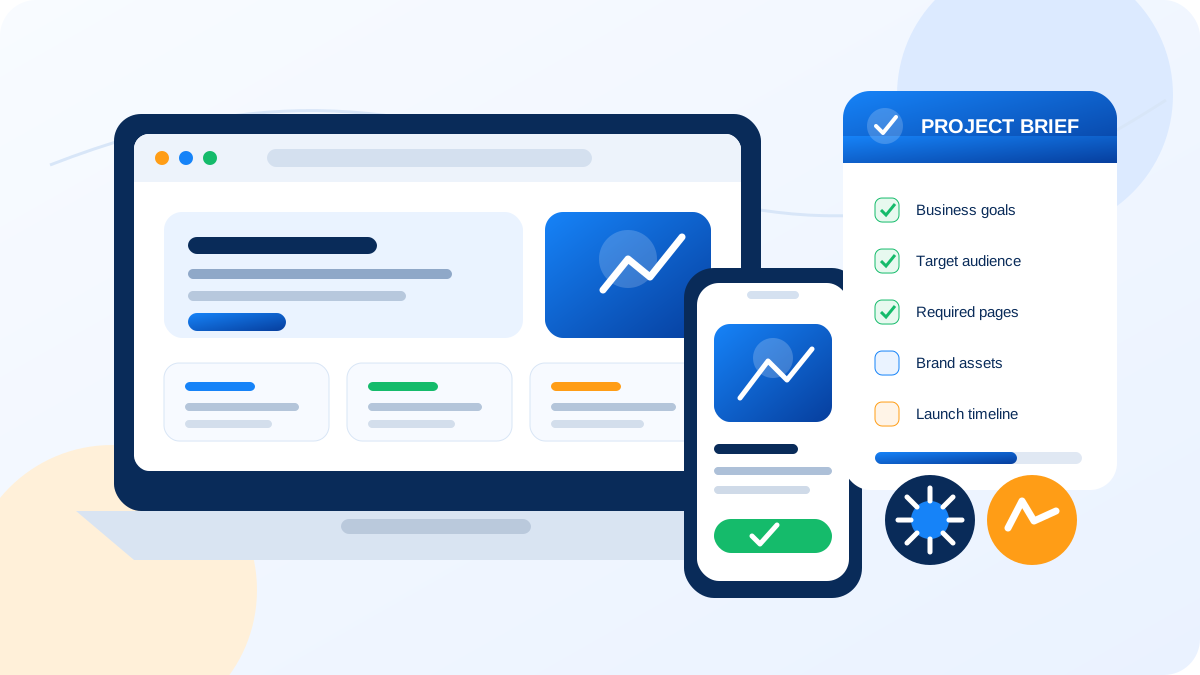
A startup or growing business website should help the right visitor understand the offer and take one meaningful next step. More animation, sections or buttons do not automatically improve conversion. The page needs a clear audience, message, proof and action that match the current stage of the business.
- Who is the priority visitor?
- What problem brings that visitor to the page?
- What must they understand before acting?
- What verified proof reduces uncertainty?
- Which action should be measured?
1. Choose one primary action
An early product may need waitlist registrations or demo requests. A service startup may need consultation enquiries. A D2C brand needs completed purchases, while a studio or clinic may prioritise bookings. Select the action that reflects the real business process and keep secondary options available without giving them equal visual weight.
2. Explain the offer without internal language
Visitors should not need knowledge of the founder's industry vocabulary to understand the website. State the customer, problem and outcome in plain language. Product features can support the explanation, but the page should connect those features to a practical benefit or use case.
3. Use the proof the business genuinely has
A new business may not have hundreds of reviews. It can still provide useful evidence through founder experience, product demonstrations, pilot results, qualifications, partnerships, clear process information or customer feedback used with permission. Avoid invented statistics, generic awards and logos without a verifiable relationship.
4. Match landing pages to campaign intent
A campaign page should continue the promise made in the advertisement, email or social post. Keep the audience, offer and action focused. Separate landing pages are useful for genuinely different services, launches or customer groups, but creating many keyword variations with nearly identical content is not a sustainable strategy.
5. Reduce friction in forms and bookings
Ask only for information needed for the first response. Explain what happens after submission, confirm that the request was received and route it to the right person. Booking systems should show suitable availability and work clearly on mobile devices.
6. Build ecommerce confidence before checkout
D2C product pages need clear photographs, useful descriptions, variants, pricing, delivery information, return policies and customer-support details. The checkout should not introduce unexpected costs or ask customers to repeat information unnecessarily. Test payment success, failure and confirmation journeys.
7. Design for mobile speed and clarity
Customers may arrive from advertisements, social media or WhatsApp on a phone. Compress images, avoid unnecessary effects, keep text readable and make important buttons easy to reach. Check that floating contact actions do not cover checkout, forms or page content.
8. Measure actions, not only visits
Track the events that reflect progress: form submissions, demo requests, booked appointments, purchases, calls or important downloads. Review which pages and traffic sources produce those actions. Improvements should respond to actual behaviour rather than changing the website continuously without evidence.
9. Connect the website to a useful local hierarchy
Search-ready foundations include original content, accurate titles, logical headings, internal links, canonical URLs, structured data and sitemap inclusion. A startup located in or serving a specific area should provide useful business information rather than copying one generic city page.
Our supporting service pages explain website requirements for startups and brands in HSR Layout and businesses in Koramangala. Weform Solution serves these areas from Mysore without claiming local offices.
Final conversion checklist
Frequently asked questions
What should be the main conversion on a startup website?
Choose the action that best matches the current stage, such as a demo, waitlist registration, trial, purchase or consultation.
How much proof does a new business need?
Use the strongest verified proof available, including founder experience, demonstrations, pilot results, testimonials with permission, certifications or transparent process information.
Should every campaign use a separate landing page?
Use one when the audience, offer or action genuinely differs. Avoid unnecessary near-duplicate landing pages.
Planning a startup or growth website?
Share the audience, offer, proof and conversion goal. Weform Solution can recommend a focused page structure and measurement plan.
Discuss Your WebsiteBangalore Website Design