

A website project becomes easier to estimate and execute when the business requirements are clear. A design brief does not need technical language. It simply records what the website must achieve, who it is for and what visitors should do next.
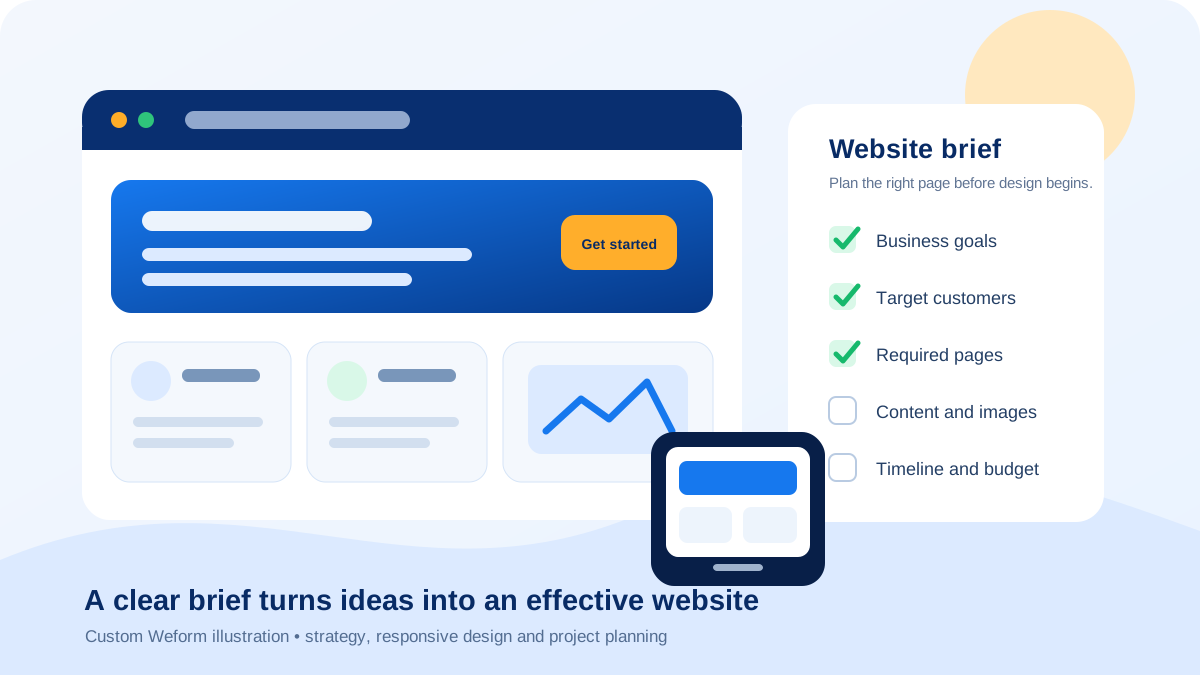
- Why is the website being created or redesigned?
- Who are the priority customers?
- Which pages and functions are required?
- What content and brand material are available?
- What is the expected timeline and budget range?
1. Define the business objective
Start with one primary outcome. The website may need to generate enquiries, explain services, collect bookings, sell products, display completed work or support existing customers. Secondary goals can be listed, but the primary goal should guide the structure and calls to action.

2. Describe the target audience
List the types of customers the website should attract, their location, common requirements and the information they need before contacting you. A Mysore service business may target local customers, customers across Karnataka or buyers throughout India.
3. List the required pages
Giving important services their own useful pages usually provides clearer information than placing every service in a single short page.
4. Identify functions and integrations
Record every function needed at launch: enquiry forms, WhatsApp contact, appointment booking, payment collection, product catalogue, login, document upload, maps, email notifications, CRM connection, analytics or business messaging integration. Separating essential features from future enhancements helps control scope.

5. Prepare content and brand assets
Confirm who will supply the logo, service descriptions, company profile, contact details, photographs, videos, testimonials, certificates and project examples. Original business photographs and verified information generally build more trust than generic content.
6. Include SEO and local visibility requirements
The brief should identify priority services and service locations without forcing keywords into every sentence. Ask for unique page titles and descriptions, logical headings, mobile-friendly layouts, fast-loading images, internal links, canonical URLs, sitemap inclusion and appropriate structured data.

7. Decide the conversion path
Choose the main action visitors should take—request a quote, call, send a WhatsApp message, book an appointment or submit an enquiry. Important pages should lead naturally to that action.
8. Confirm budget, timeline and responsibilities
A realistic budget range helps determine the suitable approach. Also note the target launch date, approval contact, content deadlines, hosting responsibility, ongoing maintenance and who will update the website after launch.
Final website brief checklist
Frequently asked questions
What should a website design brief include?
Business goals, target customers, pages, features, content, branding, SEO needs, budget, timeline and the desired visitor action.
Why is a website brief important?
It helps everyone agree on the scope and reduces avoidable changes after design or development has begun.
Can Weform help prepare the brief?
Yes. We can conduct a requirement discussion and recommend a practical structure for your business website.
Planning a business website in Mysore?
Share your requirements with Weform Solution. We will help organise the brief and recommend the simplest suitable approach.
Discuss Your WebsiteWebsite Design Service